

The afternoon light falls at an angle across Grožnjan, finding every groove in the ancient stone and setting the hilltop façades quietly alight.
Legend says that long before people came to Istria, giants lived here. They built their small towns on the hilltops, and stood so tall they could join hands across the valleys between them.
I arrived expecting bustle. What I found was smaller and stiller – a handful of cobbled streets, a bell tower, a square, and a village that has chosen, quite deliberately, to remain itself. Perched above the Mirna valley, it has long drawn artists and music students, yet it wears its reputation as a creative haven lightly.


With the annual jazz festival just hours away, I expected the galleries and restaurants to be in full flow. Instead, many doors were closed, and the restaurants had roped off corners for locals to dine later that evening. But the scent of truffle drifting through the lanes, and a piano melody being rehearsed behind an open window, encouraged me to wander.
It was in this quieter-than-usual state that I pushed open the door of an artist’s studio – and stepped, without knowing it, into the story of my whole trip.
I’ve always admired art: Dalí, Chagall, Picasso. I can only draw what I can see, so artists who translate the energy of their minds so freely have always captivated me.
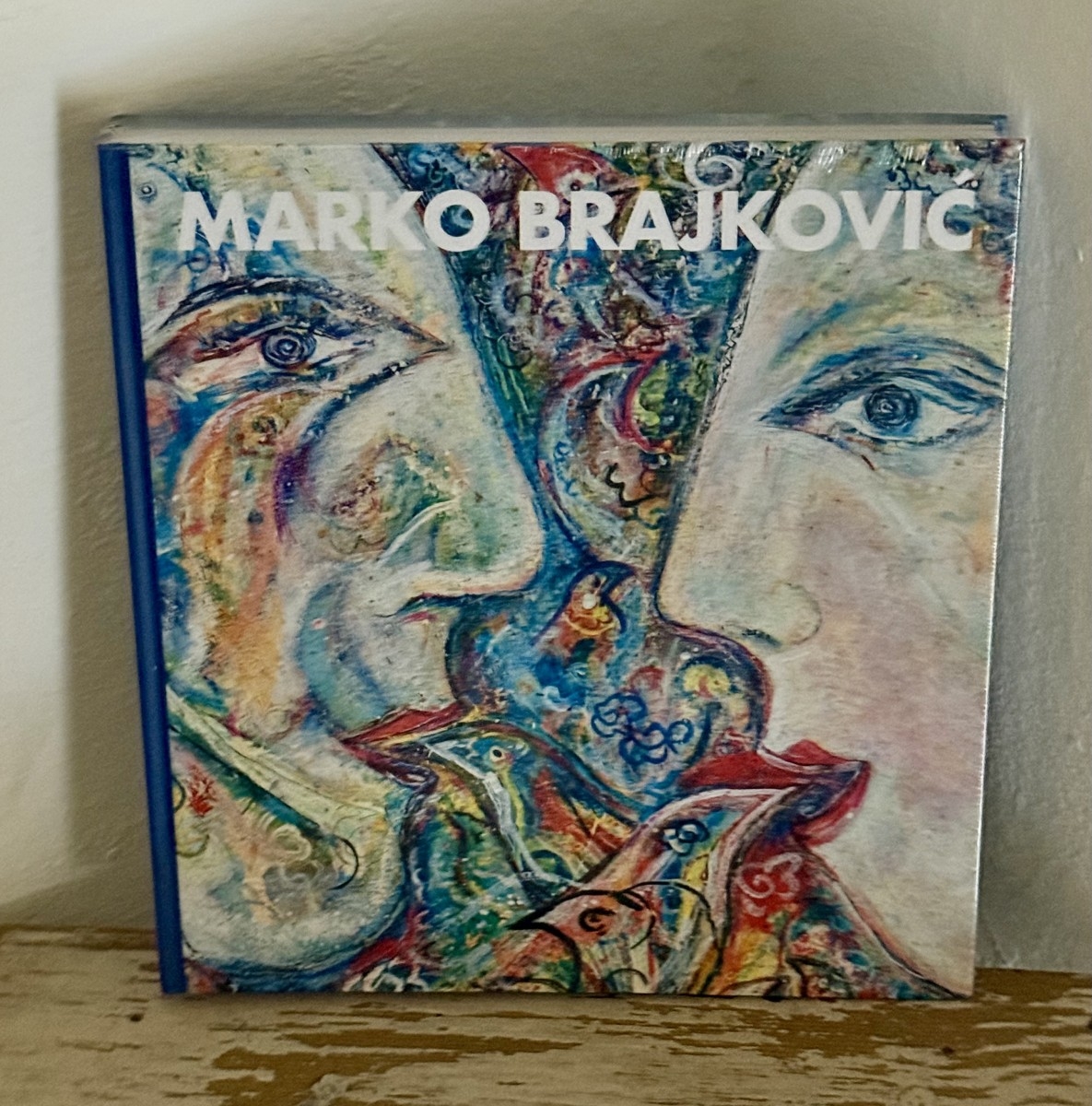
Standing in this studio, something in the work reached across that distance. The paintings held their own against the masters I’ve queued for in famous galleries, and here they were, in a hilltop village in Istria, with the painter himself standing beside them.


Marko showed me around his studio. His work sells all over the world, and I understood quickly that a painting was beyond my reach. But I couldn’t leave without a connection to his amazing work. He was tired – it had been a long day, and he was moments from locking the door. Yet he showed me around, and I noticed some sketches – his daily warm-up before painting. I asked him which one he preferred. Then I bought the one he pointed to on the spot and carried it away, rolled in a tube into the evening.

The jazz had begun by the time we found the square again after dinner – unhurried, open-air music belonging to the old stone walls and the local folk. And there, in the way that small places and good evenings arrange these things, I found myself standing next to Marko Brajković.
We talked, loosely held in translation, the music carrying on underneath. He told me about the farm in the Black Forest where he grew up, and why he chose Grožnjan to settle. He has four children, and when I asked what keeps him here, his answer was simple. It is unpretentious. A good place to raise a family. A place that does not ask you to be anything other than what you are.
I told him I had been drawn to the birds in his work. He looked at me for a moment and said: “Birdsong is the music of the gods.” Wherever he goes, he told me, he listens for the birds. I felt the hair rise on my arms. Anyone who has read Journey in Colour knows that birds are stitched into everything I write. His paintings merge inner emotional worlds with the natural one, and suddenly I understood why his walls had stopped me at the door.
From there the conversation loosened, and we chatted – about the local area, cars, a shared intolerance of sulphites, where to find the best local restaurants pouring organic wine. It was a wonderful experience to get to know the artist behind the work that had captivated me, more than any art catalogue could.
Walking back down the hill, with the sketch under my arm, I understood what had driven me to purchase on impulse. Art is an exchange of energy into the world. I felt the energy, the philosophical depth, and warmth of his work that only a confessed romantic at heart would.
Interested in travelling for art? Find other places that might interest you to visit. Or read my Substack to learn why birds are so important to my Journey.


Leave your thoughts