
Three things define the Baix Empordà region of Catalonia: the emerald and sapphire coastline where the Mediterranean meets volcanic stone, the medieval villages perched on hillsides like sentinels watching over time, and Catalonian food. This isn’t cuisine designed to impress food critics or earn Michelin stars (though several restaurants here have). This is cooking rooted in place: scarlet prawns from Palamós harbour, ancient grains milled on-site, vegetables picked that morning from gardens you can see from your table. Eating here isn’t about novelty; it’s about tasting what happens when tradition and obsessive quality converge on a plate.
The Colour and Flavour of Catalonia


The Baix Empordà palette shifts between earth and sea. Lush green countryside unfurls in rolling hills where golden hay bales dot the landscape like rustic spirals. Ancient stone villages, honey-coloured limestone and terracotta, rise from valleys. The Mediterranean provides the deep blue sapphire where it crashes against volcanic rocks, and pale aquamarine in protected coves.
But the real colour here comes from ingredients. Scarlet prawns from Palamós, the famous gamba roja, arrive at tables still glistening with sea salt. Tomatoes achieve impossible shades of red when rubbed onto bread for pa amb tomàquet. Orange-yolked eggs from free-range chickens crown dishes like edible suns. Purple aubergines, emerald basil, golden saffron. Every plate presents a still life painted in the region’s natural abundance.
The flavours are equally rooted in place. Olive oil tastes of the rocky soil where trees grow. Wine carries hints of Mediterranean salt air. Even simple grilled sardines, seasoned only with sea salt, somehow taste of the specific cove where they were caught.
La Malcontenta: The Fortified Farmhouse Retreat


A Place Named for Mermaids
Nestled just outside Palamós sits Hotel La Malcontenta, a 19th-century fortified farmhouse reborn as a five-star boutique retreat. Pine trees surround it with secret trails lead to a tranquil sandy cove. Its name comes from a local legend about a fisherman’s love for a mermaid under the full moon.
There’s a unique magic here that relaxes you, slowing you down to see beauty you might otherwise miss. Perhaps a mermaid sighting isn’t so far-fetched after all.
Architecture That Breathes History
The building preserves its original allure: stunning exposed stone walls, warm oak floors, majestic high-beam ceilings. Fourteen rooms blend classic and contemporary with elegant white linen sofas, exquisite decorative touches, and framed antique portrait sketches. A hint of sweet fig permeates the air, creating a refreshingly inviting atmosphere.
Pool Days and Bird Baths


A typical day by the pool here is tranquil, with birds as your only companions. I could spend hours watching sparrows swoop down for refreshing dips, their bellies turning electric blue from the water’s reflection, gliding across the pool as if they’d just soared from Avatar.
The Food: Modern Catalan
The hotel restaurant highlights modern Catalan cuisine. Leisurely breakfasts served in the garden set the day’s tone. Lunch and dinner showcase regional ingredients with contemporary technique.
I indulged in burrata with courgette ribbons and mango, sweetness and creaminess balanced by vegetable freshness. Artichokes with Iberian ham paired in perfect harmony. Tuna arrived elegantly plated. Comforting lamb terrine and salmon with carrot cream demonstrated the kitchen’s range. But being in an area so passionate about culinary heritage, I was eager to explore beyond the hotel.
Reflection: Staying at La Malcontenta provided a luxurious base. The fig-scented rooms and the quiet, bird-watching pool provided calm after a busy day exploring.
Platja del Castell: Beach Dining Perfection
The Walk Through the Countryside
The local beach lies a twenty-minute walk through the countryside from La Malcontenta. Walking this path in the pine-scented air, with golden light filtering through the trees, was a treat away from busy promenades.


The Beach Itself
Platja del Castell is a serene, unspoiled stretch bordered by pine forests. Three hundred meters of soft golden sand meet crystal-clear waters shimmering between emerald and deep blue. No high-rise hotels, no sprawling resorts, just the gentle curve of the bay and the rustling of the trees. It’s a natural sanctuary. Kayaks and paddleboards are available for exploring hidden grottos. A cliff-top viewpoint offers breathtaking panoramic sunset vistas.
The Chiringuito
A single beach café serves the essentials: food, drinks, and the delightful sizzle of grills preparing whole sardines. They arrive kissed by olive oil and sea salt, scales still slightly crispy from fire. You eat with toes nestled in warm sand, gazing at the sea.
This is Catalonia’s culinary philosophy distilled to essence: perfect ingredients, minimal intervention, maximum flavour. The sardines taste of the specific waters where they were caught that morning. The salt is Mediterranean. The olive oil is local. Nothing else is needed.
Entree dos Mons: Hidden Michelin Excellence


Finding the Secret
Palamós is renowned for its port and famous scarlet prawns. But tucked in its historic heart, beneath unassuming charm and seaside breeze, sits a culinary gem you might easily overlook.
Entree dos Mons doesn’t shout for attention. Walking past its modest exterior, complete with a kitschy 80s conservatory, you might mistake it for just another seaside eatery. Inside, a few pinecone decorations pay homage to the local area, accompanied by unpretentious seating. Everything suggests authenticity. Sincerity shines through every dish.
The Philosophy
Owned by pastry chef Roger Cama (who worked with Jason Atherton) and his Peruvian chef wife, Mila Acosta, Entree dos Mons is a sanctuary of slow food and sustainability. They mill ancient grains on-site, cultivate their own vegetable garden, and source fish directly from Palamós harbour.
Their wine list is carefully curated from small organic local vineyards, each bottle telling a story. The philosophy of “quality not quantity,” embodied by producers like Marnie & Brett Wall’s Open Clams Vineyards, which makes only 250 bottles, resonates deeply. My father instilled this ethos in me, making each glass that much sweeter.
Since 2018, they’ve earned consistent Michelin recommendations and hold KM0 status in the Slow Food Catalunya guide. Yet the experience remains intimate, as if you’ve been let in on a delicious secret.
The Tasting Menu Journey


We surrendered three hours to this culinary journey. What followed wasn’t merely a meal but a story told through each plate.
It began simply: handmade quinoa and rye bread with anchovy froth, elevated by crisp cava. Then, like a curtain rising, came shrimp tartare from Palamós with coconut ajo blanco – garlic, almonds, and cherries perfectly balanced.
Next revelation: black pudding French toast crowned with quail’s egg, warm and indulgent, like a comforting hug drenched in sunshine.
Aubergine with roast beef, pickled onions, and mustard followed – flavours clashing and harmonising like old friends in lively conversation. Octopus causa arrived beautifully layered with sweet potato and garden sauces, each component placed with intention.
Mila’s father inspired the mixed ceviche – bold and vibrant. Delicate saffron risotto followed, golden and tender, topped with baby cuttlefish and black ink, a taste of Mediterranean twilight.
The savoury chapter concluded with Forallac-style lamb, rich in heritage and depth.
Dessert was elegantly surprising: borrachos of pisco sponge cake with lemon verbena and yoghurt ice cream, cradled by vanilla wafer. Just when we thought the evening concluded, Mila emerged with warm petit fours, sealing the memory with cordial warmth.
Can Roquet: Dining Above the Valley
The Serpentine Ascent
The drive to Can Roquet takes you through a six-mile ascent to a lovingly converted 17th-century farmhouse, adjacent to the parish of Romanya de la Selva.


The Setting
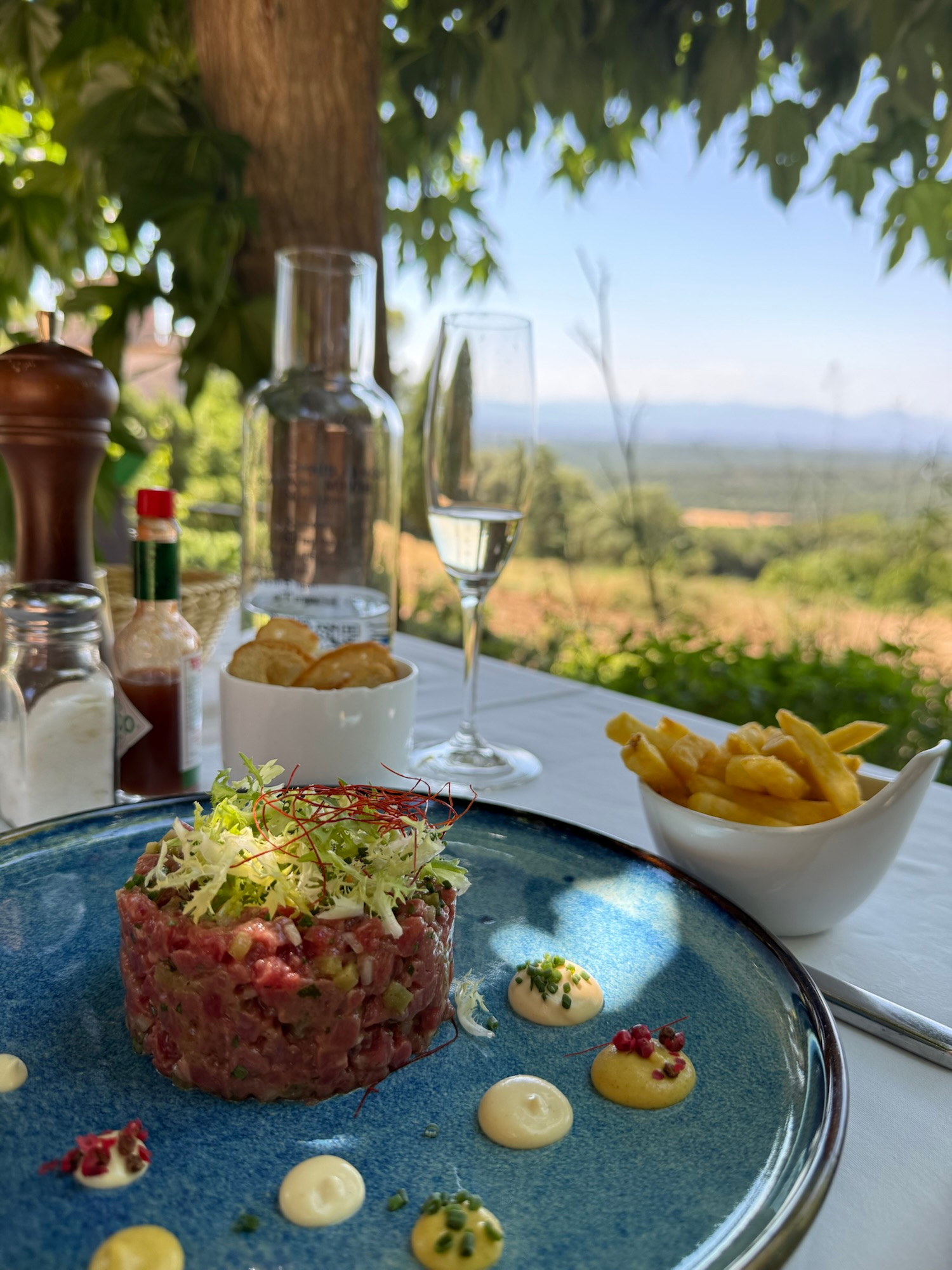
Settling onto the terrace under grand Plantus Hispanica trees, dappled shade provided a soothing escape from the sun. Before me spread a vista: Serra de les Gavarres unfurling like green velvet, the Pyrenees majestically framing the horizon.
The forest glimmered in a dance of yellows and greens with densely packed pines under the sun’s warm embrace. Swallows swooped above, gentle cries harmonising with church bell chimes. The terrace was dotted with tables, all surrounded by fragrant planters of mint and rosemary. This, without doubt, was one of the most exquisite dining spots I’ve ever experienced.
Bold and Inventive


After a delicate amuse-bouche, I began with carpaccio de gamba roja – a dish fit for admiration before consumption. Palamós prawns sliced to perfection, drizzled with velvety jus, adorned with orange caviar bursting like ocean pearls.
Next, steak tartare arrived. A familiar dish, yet presented unlike I’d encountered. Hidden beneath exquisitely seasoned meat: a slow-boiled egg, yolk oozing like molten gold. Sauces danced around the plate, each adding its note to the flavour symphony.
For dessert, a dark chocolate soufflé, decadently rich, paired with crunchy vanilla ice cream. Gazing over the valley, a thought crossed my mind: had I opted for dinner instead, I could have feasted my eyes on the sunset. Just one more reason to plan my return.
Bell Lloc: Farm-to-Table Tradition
Restored Farmhouse Charm
Bell Lloc in Santa Cristina d’Aro is a beautifully restored farmhouse with charming stone walls and beamed ceilings, complete with lovely courtyard seating among the trees.


Though recommended in the Michelin guide, the atmosphere is far from pretentious. It focuses on farm-to-table, traditional Catalan cuisine.
The Menu
As we perused wooden-covered menus, the waiter surprised us with pickled olives and pa amb tomàquet – the classic dish of bread with whole tomatoes sliced and rubbed onto it with olive oil and salt.
For starters, we sampled small plates. I couldn’t resist the croquettes. I’ve become a connoisseur with my own rating system. These scored a solid nine.
But the standout: mashed and roasted potato Bell-Lloc served with perol meat, a unique pork sausage cooked in a Dutch oven. It must be rich in calories to taste that incredible, but I’ll return for this dish.
For the main course, we enjoyed rice with squid and cuttlefish, capped with decadent creamy Catalan orange custard brûlée, complete with brittle caramelised sugar to crack on top.
Pont Vell: Medieval Village Dining
The Journey to Besalú
Our last destination was Besalú. Driving toward the medieval village, low-hanging clouds began to approach, rolling like otherworldly fog, tendrils weaving between the trees. Pockets of dense fog swirled in odd areas; mist collected in valleys, rising like spirits drifting between realms.
The Village
Arriving in Besalú was breathtaking. A 12th-century medieval marvel, an intricate fusion of Gothic and Romanesque architecture. The ancient 11th-century bridge welcomed us, reminiscent of a sentry keeping watch. Cobblestone streets beckoned exploration, weaving past monastery and Jewish mikveh.
The Restaurant – Pont Vell
Pont Vell, a rustic Catalan restaurant perched by the river, offered views of the Besalú bridge. Small and inviting, it featured a handful of tables within stone walls, a cosy log burner glowing, and a serving hatch delivering dishes from the kitchen above.


The pièce de résistance: grand wooden arched patio doors opening onto a spacious balcony with tables overlooking the river. I could only imagine how magical it would be to dine here under candlelight on warm evenings.
Traditional Warmth
The restaurant exuded traditional warmth, reflected in the hearty meals served. After refreshing gazpacho with burrata and pesto, I indulged in courgette flower tempura stuffed with cod and spiced aubergine caviar.
My main, lamb terrine with celery puree and onions in a rich winter sauce felt like a warm embrace. Luscious clafoutis, milky sponge dotted with baked cherries, wrapped up the meal. Each course arrived on changing crockery, adding sensory delight.
Medieval Villages Worth Visiting
Pals: Preserved 9th Century
Pals is a preserved 9th-century medieval village nestled in hills with stone buildings, picturesque arches, castle towers, and a 1000-year-old church. It’s like travelling back in time.


You can wander for a couple of hours through gift, pottery, and art shops. It has several restaurants and food shops selling produce like Iberian pork and ice cream. Maybe try the anchovy or thyme ice cream.
I took a seat in the village centre outside the town hall for an enjoyable coffee break. I treated myself to a crepe filled with lemon, sugar, and cinnamon, with a cappuccino topped with rich dark chocolate shavings that sank to the bottom.
What truly made the experience relaxing was the post-wedding confetti dancing in the breeze over cobblestones. It felt as though confetti had burst from a snow globe, unsure what to do with newfound freedom. It swirled and twirled, and watching it was very relaxing while scooping out the chocolate from the bottom of my cup with a spoon.
Understanding Catalan Food Culture
The Importance of Terroir
Catalan cuisine obsesses over origin. Not just “local”- a specific local. Prawns aren’t just from Catalonia; they’re from Palamós. Tomatoes come from particular valleys. Wine is labelled by comarca (county), not just region.
This specificity reflects the understanding that place shapes flavour. The mineral content in soil affects vegetables. The diet of free-range animals changes the taste. The proximity to the sea influences everything coastal.
Slow Food Movement
Catalonia embraced the Slow Food movement early and thoroughly. The KM0 designation, indicating ingredients sourced within zero kilometres, essentially on-site or immediately local, appears throughout the region.
This isn’t a trend or marketing. It’s a return to how Catalans always ate before industrial agriculture disrupted food systems. The movement here feels less like innovation and more like reclamation.
The Social Aspect
Meals here aren’t rushed. Lunch extends into the afternoon. Dinner starts late and lasts for hours. This isn’t inefficiency, it’s a cultural priority. Food is social glue, the excuse for gathering, the medium through which the community maintains itself.
Even simple beach lunches involve extended conversation, multiple courses, and wine that flows steadily. The point isn’t just eating, it’s being together while eating.
What Makes This Different
Most food tourism destinations trade on famous chefs or innovative techniques. Catalonia’s Baix Empordà region offers something rarer: cuisine so rooted in place that it can’t be replicated elsewhere.
You can’t make authentic gamba roja elsewhere, not because of technique but because those prawns come from these specific waters. Pa amb tomàquet tastes different here because the tomatoes, olive oil, and bread are different.
The region also maintains a balance between tradition and excellence. These aren’t rustic dishes served on a nostalgia plate. They’re refined, precise, technically accomplished, but in service of bringing out ingredient quality rather than demonstrating chef virtuosity.
Perhaps most significantly, the food scene remains largely undiscovered by international food tourism. You won’t find bus tours or cooking classes marketed to tourists. This is cuisine locals still eat, restaurants locals still frequent and traditions still alive rather than performed.
Seasonal Eating
Catalan cuisine follows seasons strictly:
Spring: Calçots (grilled spring onions), peas, artichokes, asparagus, strawberries
Summer: Tomatoes at peak, peppers, aubergines, stone fruits, beach dining
Fall: Wild mushrooms, game meats, chestnuts, grapes at harvest
Winter: Hearty stews, root vegetables, citrus, cured meats
Menus change completely with the seasons. A restaurant serving tomatoes in January would be suspect; those aren’t local, and they probably aren’t good. This constraint creates creativity, forcing chefs to work with what’s available rather than what’s trendy.
The Wine Culture
Catalan wine deserves its own exploration. The region produces everything from crisp coastal whites to full-bodied reds from inland areas, as well as the famous cava sparkling wines.
Small producers dominate. Many make only a few hundred bottles annually, selling to select restaurants and keeping the rest for family and friends. This “quality over quantity” philosophy, producing only what can be done excellently rather than maximising output, extends beyond wine to the entire food culture.
Wine here isn’t precious or intimidating. It’s part of meals, life, and daily routine. Even simple lunches involve wine, not to get drunk, but because food and wine belong together.
The Lasting Impression
Months after leaving, I still think about those Palamós prawns and how something so simple could be so transcendent. The answer: because those specific prawns, from those specific waters, prepared by people who’ve been doing this for generations, create something impossible to replicate or fake.
Eating in Catalonia’s Baix Empordà region teaches that great food doesn’t require complexity or novelty. It requires excellent ingredients treated with respect, technique applied in the service of flavour rather than show, and the patience to let things taste like themselves.
The region also proves that food culture and broader culture are inseparable. The way Catalans eat, slowly, socially, seasonally and locally reflects values extending beyond cuisine: connection to place, respect for tradition, belief that quality matters more than speed or convenience.
Leave your thoughts